
For resort-property ownership and current residence opportunities, explore Park City luxury resort property services, Waldorf Astoria Residences, and the Waldorf Astoria Hill Country opportunity.
The resilience of the Park City market is underscored by its performance in the face of broader economic headwinds, including elevated interest rates and geopolitical instability. The underlying mechanism for this stability is the high concentration of luxury and ultra-luxury buyers who are often insulated from traditional mortgage rate sensitivities. In 2025, high interest rates combined with a high-performing stock market prompted luxury buyers to utilize significant cash gains to diversify into high-altitude real estate assets. This flight to tangible assets resulted in an explosion of the $5 million plus market, which accounted for 19.7% of total sales in 2025, compared to just 7.2% in 2021.
The disciplined nature of the current market is further evidenced by the adjustment of buyer and seller behaviors. The sell-to-list ratio improved throughout 2025, suggesting that sellers are pricing properties more accurately relative to buyer demand, while days on market decreased by 25% for single-family homes, indicating that well-positioned inventory is moving with increased velocity.
The following data summarizes the divergence between property types in Park City proper, highlighting the aggressive appreciation in the condominium and townhome segments compared to the relative stability of single-family homes.
Sources: The stark 30% increase in the average sales price of condominiums, despite a marginal 1.0% increase in unit volume, suggests that the market is being driven by high-end, new-construction developments rather than a broad-based increase in existing inventory turnover.2 In the final quarter of 2025, the combined median sales price for all property types in the 84060 zip code reached $1,997,500, a 21.2% increase from the same period in 2024, signaling that the market entered 2026 with considerable momentum.
A fundamental shift in the 84060 demographic profile has emerged over the last 24 months. Agents and analysts report a "younger" demographic of buyers who are increasingly out-of-state migrants choosing to relocate full-time rather than purchasing secondary vacation homes. This migration pattern is transforming Park City from a seasonal resort town into a primary residence enclave for affluent professionals who can work remotely. These buyers demonstrate a strong preference for "move-in-ready" homes, often paying a significant premium for new construction or recently remodeled properties.
The demand for exclusivity has also revitalized the vacant land market. Buyers are showing a heightened appetite for lots in gated communities that carry golf club memberships, with such entitled lots selling for $800,000 to $1,000,000 more than comparable parcels without membership options. This preference for amenitized land reflects a broader trend toward lifestyle-integrated real estate, where the asset is valued as much for its social and recreational utility as for its square footage.
The redistribution of sales into the upper price brackets illustrates the structural shift of the 84060 market toward a luxury-dominant ecosystem.
Sources: The dramatic doubling of the median price in Upper Deer Valley and the massive volume increase in Deer Crest underscore the market's preference for new, branded, amenity-rich condominiums that offer ski-in/ski-out convenience and world-class services.
The 84060 zip code contains the most historically significant and amenity-rich neighborhoods in the region. Each sub-market offers a distinct trade-off between walkability, historic charm, resort access, and modern functionality.
Old Town remains the quintessential Park City neighborhood, offering the highest levels of walkability and direct access to Main Street’s dining and retail core. However, the neighborhood is increasingly defined by inventory scarcity. In 2025, only 53 homes were sold in Old Town, with the median price holding steady at $3.9 million.
The "walkability surcharge" in Old Town is one of the most significant in the country for a mountain market. Properties within a single block of Main Street typically command a premium of $500,000 to $1,000,000 over comparable homes located just three blocks away. Buyers in the "three-block zone" (a 5- to 8-minute walk) often prioritize the quieter setting and lower price point, while still maintaining pedestrian access to the Town Lift. However, those located four to five blocks from the center (a 10- to 15-minute walk) often see pricing discounts of 30–40% compared to Main Street-adjacent homes, as the walk becomes more challenging during icy winter months.
The Deer Valley sub-market represents the peak of luxury resort living within the 84060 zip code. The year 2025 saw an "explosion" in activity, particularly in the Deer Crest sub-area, driven largely by the Founders Place development.
Sources: The dramatic doubling of the median price in Upper Deer Valley and the massive volume increase in Deer Crest underscore the market's preference for new, branded, amenity-rich condominiums that offer ski-in/ski-out convenience and world-class services.
Source: The typical entry-level price for a single-family home in Prospector ranges from $1.2 million to $1.6 million, making it a primary target for young professional families. However, high-end homes in Prospector can reach $2.5 million, competing with lower-priced Old Town inventory but offering far superior utility.
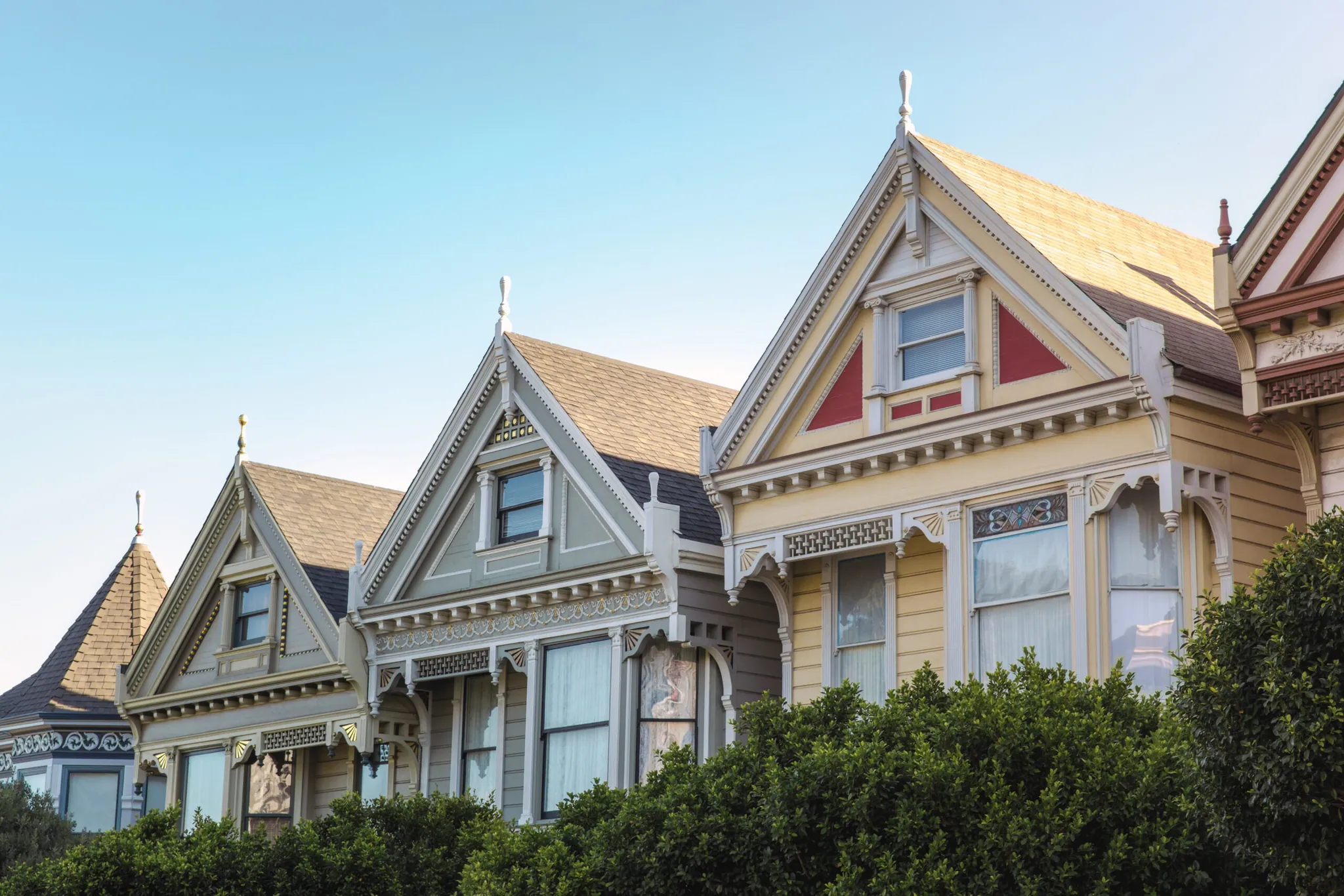
Prospector serves as a vital mid-tier alternative to the resort-heavy neighborhoods, offering a blend of Victorian-style single-family homes, townhomes, and condominiums. It is widely considered one of Park City's most affordable and convenient neighborhoods, situated within walking distance of the high school, junior high, and elementary school.
The neighborhood's defining lifestyle feature is its direct access to the Rail Trail, a 28-mile multi-use path that provides a non-motorized route to Main Street in approximately 15 to 20 minutes. While properties in Prospector lack the prestige of a Deer Valley address, they offer significantly better functionality for modern families.
The 84060 real estate market is heavily influenced by the Park City Preservation Board (PCPB) and the municipal code governing historic districts. For investors and homeowners, these regulations translate into higher maintenance costs and longer renovation timelines.
Maintaining a historic Old Town property involves specialized care that is often underestimated by newcomers. Maintenance costs for Victorian-era structures in a high-altitude climate are estimated to be two to three times higher per square foot than modern construction.
Park City’s extreme climate dries out wood quickly, requiring repainting every 5 to 7 years at a cost of $15,000 to $25,000.
Historic single-pane windows with rope-and-pulley systems are thermally inefficient. Restoring them costs $800 to $1,500 per window, while high-end historic replicas can cost $2,000 per window.
Many original Old Town homes sit on stone foundations without modern moisture barriers. Comprehensive repairs to bring these up to code can range from $80,000 to $150,000.
Park City's short-term rental market is subject to rigorous oversight. Within the city limits, owners must obtain a Nightly Rental License and pass an annual safety inspection. This regulatory clarity has shifted the investment focus from speculative timing to management quality and HOA alignment.
In terms of taxation, Utah offers a significant 45% valuation break for primary residences, meaning property taxes are only paid on 55% of the market value. However, this exemption does not apply to second homes or nightly rentals, effectively doubling the tax burden for non-primary owners.
Sources: Conroe Economic The municipal government also levies a 2.5% transfer fee on real estate sales within the city boundaries, which provides funding for open space preservation and transit infrastructure.
The 84060 zip code is currently navigating a transformational period in urban mobility. As regional population growth outpaces road capacity, the city has adopted a "transit-first" philosophy to mitigate seasonal congestion.
State Route 248 serves as a critical entryway into Park City, carrying roughly 20,000 vehicles daily during peak winter conditions. In 2019, the city and county councils formally opposed a plan to widen SR-248 to five lanes, opting instead for transit-centric solutions. The current "Re-create 248" study has identified Bus Rapid Transit (BRT) in side-running lanes as the optimal mode for addressing bottlenecks at PC Hill.
This move toward BRT is designed to avoid "inducing demand"—a phenomenon where wider roads simply attract more cars—and to protect the character of the town's entryways. The proposed side-running lanes will create a seamless connection with the BRT system planned for SR-224, strengthening north-south and east-west connectivity between Kimball Junction and the resort bases.
Park City's fare-free transit system is one of the most robust in the Western United States. Residents in neighborhoods like Prospector and Old Town utilize the system to bypass parking headaches at the resorts and on Main Street.
Sources: The transit system is heavily integrated with the area's recreational infrastructure. All buses are equipped with racks for 2 to 3 bicycles, and the Purple Route has been expanded to provide daily service to the Bonanza Flat and Bloods Lake trailheads during the summer and fall.
The quality of local schools is a primary driver of real estate values in the 84060 area. The Park City School District (PCSD) serves over 4,500 students and is consistently ranked as one of the premier districts in Utah.
The recent demolition of Treasure Mountain Junior High in late 2025 marked a major shift in the district’s master plan. The eighth-grade population was moved to Ecker Hill Middle School, while ninth-graders were integrated into Park City High School. This project has been met with community scrutiny due to environmental violations related to the handling of asbestos and contaminated water during the demolition process.
Within the 84060 limits, McPolin Elementary serves as the neighborhood school for Deer Valley, Old Town, and Prospector. The district's commitment to "move-in-ready" education, including language immersion and gifted programs, makes these areas highly desirable for families despite the high cost of entry.
The 84060 market also supports a robust ecosystem of private and charter education. Approximately 10% of K-12 students in Park City are educated in private schools, compared to a state average of just 3%.
Sources: Rowland Hall, though located in Salt Lake City, remains a dominant force in the Park City market, with one in six students commuting from Park City via dedicated bus stops.
Park City is a mountain town in Summit County, Utah, located about 32 miles east of Salt Lake City at an elevation of roughly 7,000 feet. It is home to Park City Mountain Resort and Deer Valley Resort and hosts the annual Sundance Film Festival.
Park City is known for its two world-class ski resorts (Park City Mountain and Deer Valley), the historic Main Street mining-era downtown, Sundance Film Festival, and a residential market that ranges from in-town condominiums to mountainside ski-in/ski-out estates.
The Kink Team has long-standing client and personal relationships in Park City and serves Texas-based buyers seeking a primary, second-home, or ski property in the Park City and Deer Valley markets. We work alongside trusted local Utah partners on every Park City transaction.