
The Greater Houston housing market in 2025 achieved a state of balance that has significantly altered the negotiating power of buyers and the strategic imperatives of sellers. After several years of rapid price escalation and supply shortages, the market returned to pre-pandemic norms while maintaining a level of resilience that outperformed many other large U.S. metropolitan areas.1 Total property sales for the full year of 2025 reached 104,325 units, marking a 2.3 percent increase over the previous year.1 This growth was underpinned by a total dollar volume of $42.9 billion, a 4.5 percent rise that highlights the sustained demand for housing despite elevated mortgage rates.1
The stabilization of interest rates, which averaged approximately 7.23 percent for a 30-year fixed mortgage in early 2025 and moderated toward 6.79 percent by the end of the year, gave many buyers renewed confidence.2 One of the most significant shifts in the market was the increase in inventory. By late 2025, Houston maintained approximately 4.4 months of single-family home inventory, effectively moving the market into a "buyer-friendly" or "balanced" zone compared to the critically low levels seen in 2022.2
| Annual Market Comparison Metric | 2024 Full Year Data | 2025 Full Year Data | Year-over-Year Change |
|---|---|---|---|
| Total Property Sales (Units) | 101,980 | 104,325 | +2.3% |
| Single-Family Home Sales (Units) | 85,373 | 88,634 | +3.8% |
| Total Dollar Volume | $41.06 Billion | $42.9 Billion | +4.5% |
| Median Home Price | $330,000 | $334,990 | +1.5% |
| Average Home Price | $422,753 | $426,558 | +0.9% |
| Average Days on Market (DOM) | 59 | 64 | +8.5% |
| Pending Sales (December) | -- | 8,707 | +12.0% |
The modest 1.5 percent increase in the median home price suggests that the era of double-digit appreciation has paused, providing a healthier environment for long-term residency and investment.1 However, demand in the luxury segment—properties priced at $800,000 and above—remained exceptionally strong, pushing the average home price to a record high of $449,561 in June 2025.
The functional logic of the North Houston corridor is inextricably linked to its role as a global logistics hub. The North Houston District (NHD), formerly identified as the Greenspoint area (77060), has undergone a fundamental transformation from a traditional office submarket to a leader in industrial production and logistics. This shift is driven by the area’s proximity to George Bush Intercontinental Airport (IAH), the intersection of Interstate 45 and Beltway 8, and the Hardy Toll Road.
As of January 2026, industrial space in the District outnumbers office space by a ratio of two-to-one, accounting for more than 20 million square feet of commercial real estate.4 Unlike traditional storage warehousing, the new wave of industrial tenants focuses on onsite production, which significantly increases the density of the workforce and the resulting "payroll spillover" into the surrounding residential communities.
The Panelmatic facility at the WestPoint 45 distribution center exemplifies this trend, featuring 40-foot clear heights and 156 dock-high doors alongside 50,000 square feet of dedicated office space for engineering and administrative staff.4 Similarly, Seojin Global’s transformation of a former low-rise office building into a manufacturing hub for aluminum telecom cabinets illustrates the high-value repurposing of land within the 77060 and 77032 zip codes.4 This industrial activity stabilizes the local housing market by providing a diverse range of jobs—from entry-level warehouse positions to high-skilled engineering roles—all within a close commute of residential sectors in 77037, 77039, and 77073.
| Major Industrial Tenant | Facility Type | Square Footage | Workforce Impact |
|---|---|---|---|
| Panelmatic Electrical Solutions | U.S. Headquarters / Production | 728,080 | ~1,000 employees |
| Seojin Global | Telecom Equipment Manufacturing | 150,000 | $20M build-out |
| Amazon | Logistics / Distribution | Multiple Sites | High Density |
| Coca-Cola | Production / Distribution | Regional Hub | High Density |
| Sysco | Headquarters / Logistics | Established | High Density |
The single most significant infrastructure project impacting North Houston is the reconstruction of Interstate 45, known as the North Houston Highway Improvement Project (NHHIP). This multi-billion-dollar endeavor by the Texas Department of Transportation (TxDOT) aims to modernize the corridor from Downtown Houston (77002) to Beltway 8 (77060/77032).
The project is structured into three distinct segments, each with unique implications for local residents and property values. Segment 3, which focuses on the Downtown Loop system, began construction in 2024 and is expected to reach completion by 2037.5 Segments 1 and 2, covering the area from the North Loop 610 to Beltway 8, are not scheduled to begin construction until after 2030, but their planning phases are already influencing market sentiment in neighborhoods like Independence Heights (77022) and the Near Northside (77009)
The scale of the NHHIP is vast, with projections indicating the displacement of at least 1,079 homes and 344 businesses.5 To address these challenges, TxDOT has entered into a Voluntary Resolution Agreement (VRA) with the Federal Highway Administration to ensure compliance with Title VI requirements, focusing on the mitigation of impacts on low-income and minority communities.
Residents of affected neighborhoods have access to specialized mitigation programs designed to reduce the physical and economic burden of construction:
Provides funding for eligible households to install physical barriers and air filtration products to minimize the intrusion of construction-related debris and noise.
Managed by the Texas State Affordable Housing Corporation (TSAHC), this program supports housing solutions for those displaced by the project.
A critical objective of the reconstruction is improving stormwater management to address historical flooding at problematic nodes like Greens Bayou and Parker Road.
For residents of the Near Northside and Independence Heights, the project represents a long-term tradeoff: enduring two decades of construction-related disruption in exchange for enhanced regional mobility and the eventual creation of "green caps" or plazas that will reconnect neighborhoods currently divided by the freeway.
The zip codes 77002 and 77009 represent the historic and evolving urban core of Houston. While 77002 is dominated by the Central Business District, its residential appeal has expanded through the development of luxury high-rises and the conversion of industrial spaces into lofts. The functional benefit of this area is proximity to the court system, major energy headquarters, and the theater district, catering to professionals who prioritize a "car-lite" lifestyle supported by the METRORail Red Line
| Year | Median Price per Sq. Ft. (77009) | Total Number of Sold Properties |
|---|---|---|
| 2010 | $40.09 | 256 |
| 2015 | $63.48 | 313 |
| 2020 | $138.25 | 521 |
| 2024 | $176.50 | 566 |
The Near Northside (77009) has emerged as one of the city's most significant sites of urban change. Geographically nestled between I-45, the Heights, and Downtown, the neighborhood is characterized by a mix of traditional single-story bungalows and a rapid influx of modern, three-story townhomes.8 The area's inclusion in the National Register of Historic Places in 2011 has encouraged thoughtful preservation, but the primary market driver has been lot-size reform.
In 1998, Houston reduced the minimum lot size in the urban core from 5,000 square feet to 3,500 square feet, and in some cases, as small as 1,400 square feet for parcels meeting specific standards for open space.10 This policy change enabled a construction boom; between 2007 and 2020, over 34,000 townhomes were built in Houston, many of them in the Near Northside.10 A typical conversion in this area involves the demolition of one older 1,300-square-foot home to make way for four 2,400-square-foot townhomes, effectively increasing the density of family-sized housing in the urban core
The appreciation in price per square foot—from $40 in 2010 to over $176 in 2024—reflects the massive capital investment in the neighborhood.11 Residents here choose the area for its "authentic urban community" feel and the functional advantage of being minutes from the central business district.
Moving north to the 77018 and 77022 zip codes, the market transitions into established post-war residential enclaves.
Oak Forest and Garden Oaks are premier "destination" neighborhoods for those seeking a suburban atmosphere with Inner Loop proximity. These areas are characterized by larger lots and a dense canopy of mature trees, providing a distinct lifestyle contrast to the higher-density townhome developments found further south.
The housing market in 77018 is defined by renovation and "teardown" trends. Homeowners are increasingly investing in substantial remodels of 1950s ranch-style homes, prioritizing open floor plans, updated kitchens, and outdoor living spaces.13 For those with larger budgets, the area has become a hotspot for custom new construction. In December 2025, the median sale price in Oak Forest-Garden Oaks reached $525,000, a 10.5 percent increase over the previous year, highlighting its resilience in a moderating market.
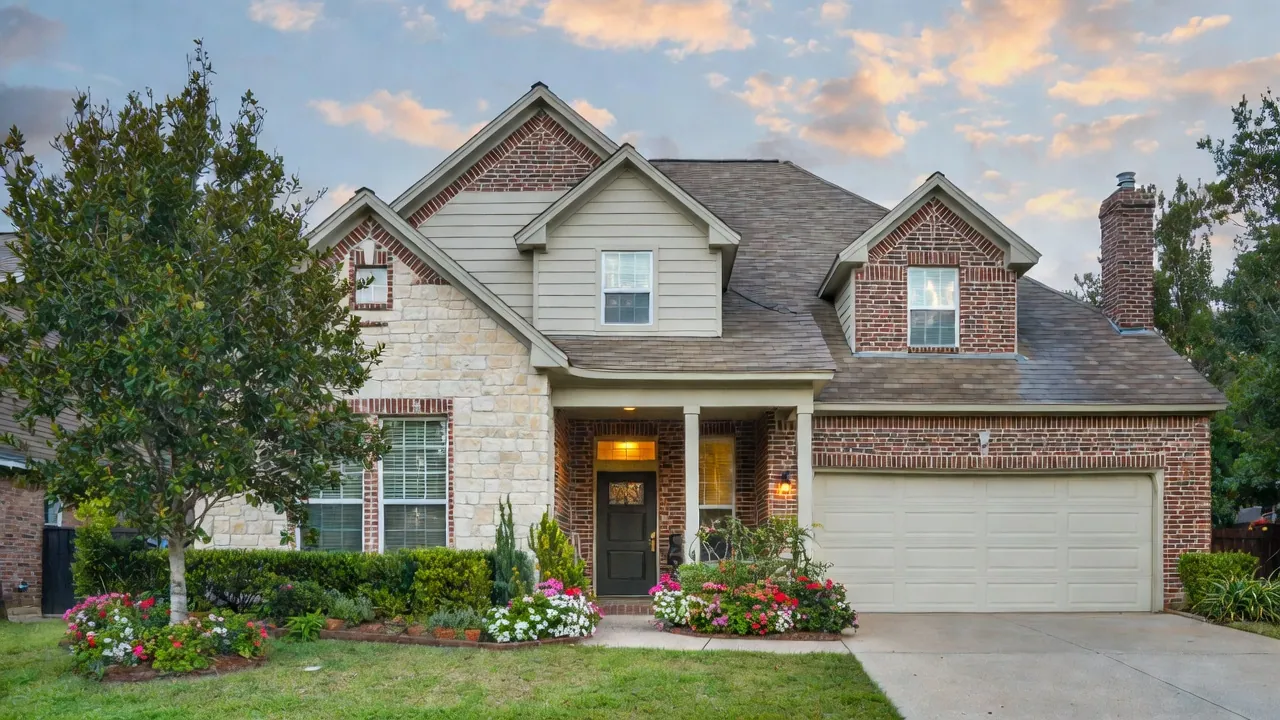
Independence Heights is a historic neighborhood situated just north of the 610 Loop. It is currently experiencing a wave of revitalization, driven by its affordability relative to the nearby Heights. Investors and first-time builders are drawn to the area for its "frontier" status, where lots can still be found for under $100,000.16 The area’s future is closely tied to the NHHIP, as Segment 1 will eventually modernize the freeway access points, potentially increasing land values further
The northwestern segment of the study area represents the more affluent, established suburban lifestyle. Zip codes like 77069 and 77070 are anchored by the "Champions" area and the FM 1960 corridor.
Champion Forest is one of the most recognizable master-planned communities in North Houston, known for its stately, multi-story homes and significant lot sizes.15 Unlike the rapid "infill" seen in the Inner Loop, Champion Forest maintains a more traditional suburban rhythm.
As of December 2025, Champion Forest is categorized as a "buyer's market," with a median sale price of $485,000.15 Homes in this area sell in a median of 82 days, reflecting a 19.6 percent decline in "Days on Market" compared to 2024, which suggests that although it is a buyer’s market, properties are moving more efficiently than in the recent past.1
The lifestyle appeal of the northwest is centered on Vintage Park, a 324,000-square-foot mixed-use development designed to evoke the atmosphere of an Italian shopping promenade.18 The center features Mediterranean architecture, hand-painted murals, and a one-acre pedestrian "Piazza" with synchronized fountains.18
Vintage Park serves as a functional and social anchor for the surrounding residential developments, which include over 1,600 residences and a major medical campus including St. Luke’s and Kelsey Seybold.18 The proximity to high-end dining (such as Gauchos Do Sul) and entertainment (Star Cinema Grill) makes the 77070 zip code highly attractive to professionals working in the nearby Hewlett Packard Enterprise campus or the Energy Corridor
| Housing Characteristic (77069) | 2024 Statistical Facts |
|---|---|
| Median Home Size | 3,730 Square Feet |
| Median Lot Size | 9,960 Square Feet |
| Median Year Built | 2001 |
| Average Bedrooms | 3.94 |
| Average Bathrooms | 3.65 |
| Median Appraised Value | $492,777 |
| Neighborhood Value Range | $376,000 – $657,000 |
The zip codes surrounding George Bush Intercontinental Airport and the North Houston District serve as the region's primary entry-level and workforce housing markets.
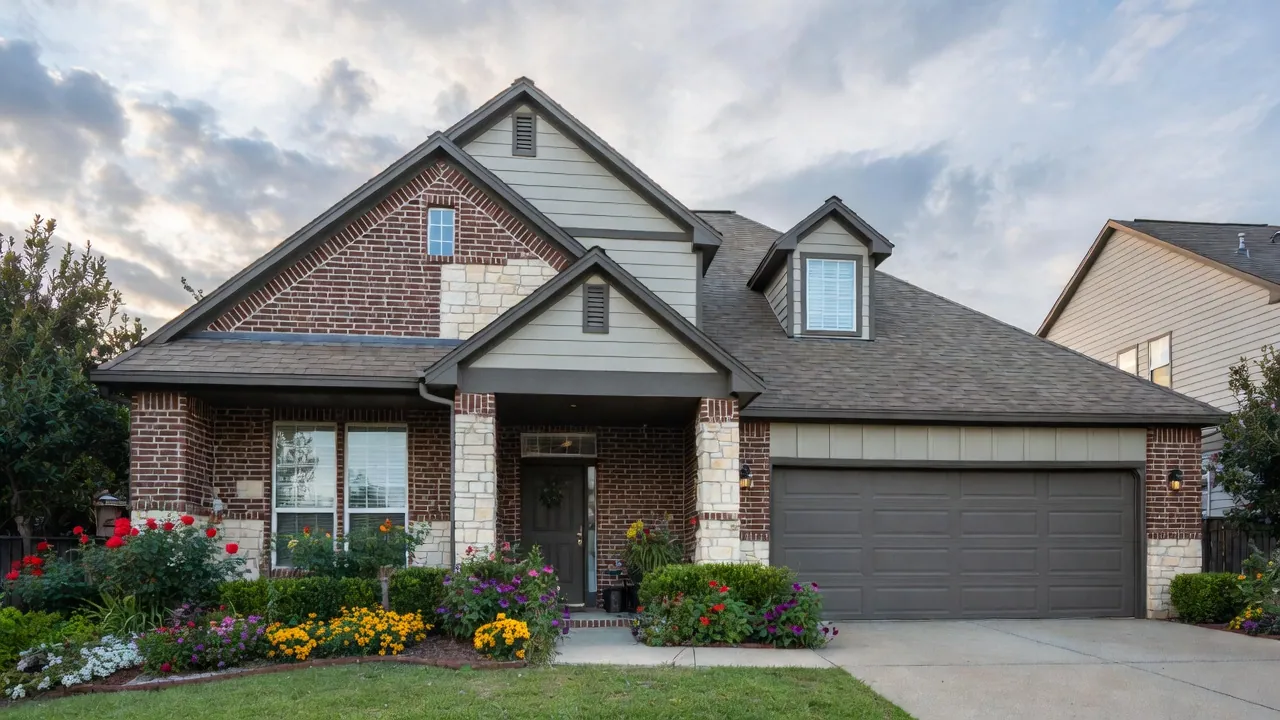
The residential character of 77060 is heavily defined by high-density multifamily housing. The North Houston District has invested heavily in public safety and infrastructure to maintain the area’s appeal for workers in the logistics sector.4 This includes the development of world-class recreational facilities like the North Houston Bike Park and the North Houston Skate Park, which serve as regional magnets for "active lifestyle" residents.
These areas represent the "frontier" for affordable new construction. For buyers seeking "new homes under $250,000," these zip codes are among the few remaining options within the Houston city limits or immediate ETJ.16 Developers in these areas are increasingly moving toward "Build-to-Rent" (BTR) communities, providing single-family living options for those who are priced out of the traditional mortgage market by elevated interest rates.
The choice of neighborhood in North Houston is frequently dictated by school district boundaries. The research area is served by several major Independent School Districts (ISDs), alongside a growing network of charter and private institutions.
Known for high-performing schools like Klein High (GreatSchools Rating: 8) and Brill Elementary (Rating: 8). The district is a primary draw for families moving to the Champion Forest area.
One of the largest and most consistently rated districts in Texas, serving the northwestern suburban corridor.
Focuses heavily on Career and Technical Education (CTE) to align with the regional logistics and industrial economy.
Serving the urban core, HISD offers various magnet programs, though many residents in 77009 and 77018 also utilize private or charter options.
The rise of public charter schools has provided families with additional choices. The Sam Houston State University (SHSU) Charter School operates several locations in North Houston (including Spring), offering a tuition-free, year-round K-6 model with a student-to-teacher ratio. The district recently received an 'A' rating, placing it in the top 10 percent of Texas school districts.
In the private sector, The Banff School (77069) serves as a college-preparatory anchor for the Champions area, offering a PreK-12 curriculum with an emphasis on fine arts and athletics. Further south, Incarnate Word Academy (77002) provides a historic all-girls Catholic education in the heart of Downtown.
The functional utility of North Houston is defined by the tension between its extensive roadway network and the resulting congestion.
The primary north-south arteries—I-45 and the Hardy Toll Road—facilitate the majority of commutes. For residents in the northernmost zip codes like 77073 or 77090, the commute to Downtown can range from 40 to 70 minutes during peak hours.5 The Hardy Toll Road offers a more predictable "pay-to-play" alternative, particularly for those heading to the airport or the northern suburbs of Spring and The Woodlands.
Public transit is largely centered on the George Bush Intercontinental Airport (IAH) hub.
Provides service between IAH and Downtown Houston, with transit times ranging from 50 to 90 minutes.
The monthly HOA fee typically covers front-yard maintenance and common area upkeep, allowing residents more time for leisure activities like pickleball, tennis, and social clubs organized by a full-time lifestyle director.
Serves as the backbone of the urban core (77002, 77009), providing high-frequency access to the Texas Medical Center and the University of Houston-Downtown.
For residents of the Champions and 1960 area, public transit is less viable for daily commuting, requiring a car for most errands and professional travel. This "auto-dependency" is a key tradeoff for the larger lot sizes and lower density of the northwestern suburbs.
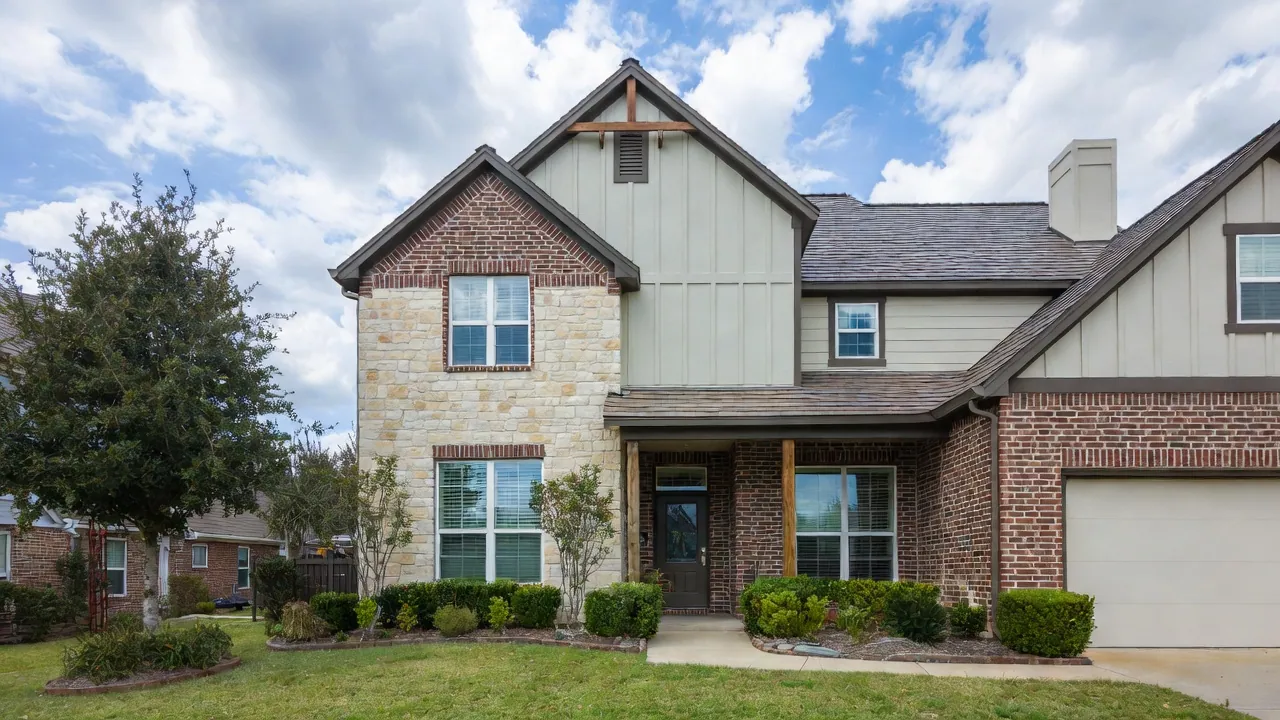
Homebuyers in 2025 frequently weigh the tradeoffs between the established northern suburbs (77069/77070) and the high-demand Energy Corridor in the west (77079/77094).
While both regions offer luxury housing and major employment hubs, their market trajectories in late 2025 showed distinct patterns. The Energy Corridor (zip code 77094) claimed the title of Houston’s "hottest housing market" in Q4 2025, with average sale prices surging nearly 50 percent to approximately $819,618. This surge was driven by corporate relocations and a scarcity of inventory in the western suburbs.
In contrast, North Houston (Champions/77069) provides significantly more value in terms of "square footage per dollar.
| Feature | North Houston (Champions/77069) | West Houston (Energy Corridor/77079) |
|---|---|---|
| Median Sale Price (Dec 2025) | $485,000 | $485,000 |
| Average Price per Sq. Ft. | $146 | $176 |
| Housing Environment | Established / Stately | Corporate / High Velocity |
| Inventory Status | Buyer's Market (Balanced) | Seller's Market (Tight) |
| Dominant Amenity | Vintage Park / Cypress Creek | Terry Hershey Park / CityCentre |
The data reveals that while the median prices converged at $485,000 in December 2025, the North Houston buyer typically acquires a larger, more traditional estate, whereas the West Houston buyer pays a premium for proximity to the central Energy Corridor and higher market velocity.
Residential choice in North Houston is increasingly influenced by environmental data, particularly regarding flooding and extreme heat.
A significant portion of the North Houston corridor lies within the Cypress Creek watershed, which has historically been prone to flash flooding. In Oak Forest-Garden Oaks (77018), 44 percent of properties are currently considered at moderate risk of severe flooding over the next 30 years.14 In the Energy Corridor and portions of the western suburbs, this risk jumps to 69 percent.26
The implementation of "Atlas 14" flood map updates in 2026 is expected to redefine flood zones across the region, potentially increasing insurance premiums for many properties in the 77068 and 77090 zip codes.16 Prospective buyers are increasingly prioritizing homes with existing flood mitigation systems or those situated in "Zone X" (outside the 500-year floodplain).
The "Heat Factor" in Houston is becoming a non-negotiable consideration for long-term residency. Data suggests that 98 percent of properties in the northern corridor are at "extreme risk" from heat, with a projected 214 percent to 228 percent increase in days over 110ºF over the next three decades.14 This trend is driving demand for newer, energy-efficient homes and the modernization of HVAC systems in the older housing stock of 77018 and 77069.
One of the primary lifestyle benefits of the North Houston corridor is the Cypress Creek Greenway, a massive multi-jurisdictional project aimed at creating a continuous park and trail system across the northern suburbs.
For residents of the 77070 and 77068 zip codes, the Greenway provides a functional alternative to car travel for local recreation and is a major "quality of life" driver that offsets the area's lengthy commutes.
As we look toward late 2026, the housing supply in North Houston will be increasingly defined by suburban expansion along the Grand Parkway (SH 99) and the rise of specialized residential models.
The high cost of financing has spurred a surge in Build-to-Rent developments in the 77073 and 77086 zip codes. These communities offer the perks of suburban living—private backyards, multi-bedroom layouts, and community amenities—without the barrier of a 20 percent down payment. This trend is particularly popular among the workforce in the North Houston District’s logistics hubs.
Emerging Hotspots
The North Houston residential market is a study in "strategic diversity." For those seeking a short commute and a vibrant, evolving urban environment, the Near Northside (77009) and Independence Heights (77022) offer high-growth potential through lot-size densification and infrastructure modernization. However, residents must endure significant construction activity and higher prices per square foot.
The middle-ring neighborhoods like Oak Forest (77018) provide a functional "middle ground," offering larger lots and mature aesthetics but requiring a constant investment in aging housing stock and a heightened awareness of flood risks.
The northern suburban corridor (77069, 77070) remains the gold standard for traditional suburban value. With stagnant price growth in the median segment ($485,000) and large, stately homes, these areas favor families who prioritize school district quality and high-end lifestyle amenities like Vintage Park over a short commute.
The "practical tradeoff" across the entire North Houston region is the reliance on the I-45 corridor. While the NHHIP promises to modernize this artery by 2042, the next two decades will require residents to be highly adaptable in their transit choices. Ultimately, North Houston is positioned as a market of "functional resilience," where the underlying strength of the logistics, manufacturing, and airport economies provides a stable floor for property values and residential demand. For the informed participant in this market, the key to success lies in matching one's lifestyle priorities—whether they be density, square footage, or educational access—with the specific economic and environmental profile of these diverse zip codes.
Moving to North Houston from out of state? Our relocation guide covers the villages, the three school districts, MUD and Township taxes, commute routes and a 90-day timeline.
Read the Relocation GuideHouston North refers to the residential corridor north of Beltway 8 along I-45, US-59, and the Hardy Toll Road, including neighborhoods such as Greenspoint, FM 1960, Champions, and Northgate Forest. It serves as a transitional market between inner Houston and the master-planned communities of Spring and The Woodlands.
Houston North is known for established 1970s-1990s neighborhoods, the Champions golf community, proximity to IAH airport, and significant commercial and corporate presence along the I-45 and US-59 corridors.
Houston North real estate offers strong value relative to The Woodlands and Memorial, with established neighborhoods that trade primarily on lot size, school zone, and renovation condition.